Captain
Captain: a sports team app I designed, built, and shipped solo with AI
I took Captain from a coaching problem I knew firsthand to the App Store, Google Play, and the web in five months as a team of one. AI changed what my MVP could be, and it runs inside the product too.
- Role
- Founder. Product, design, and engineering.
- Team
- Just me, with AI as my engineering partner
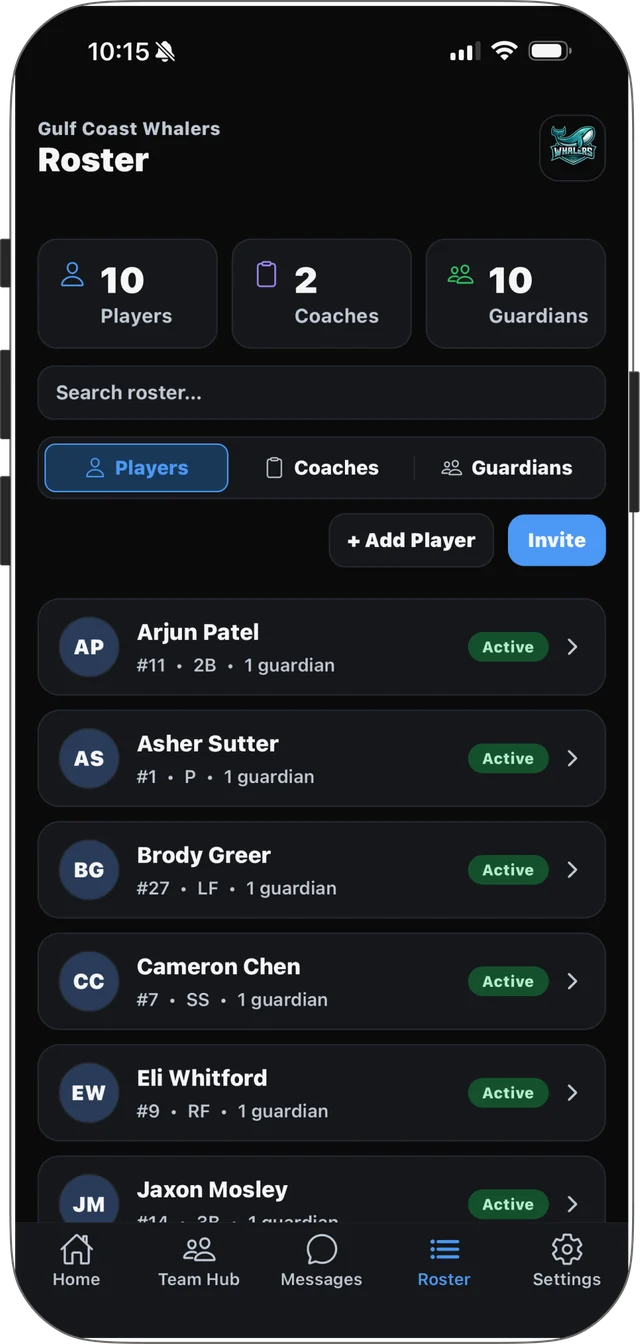
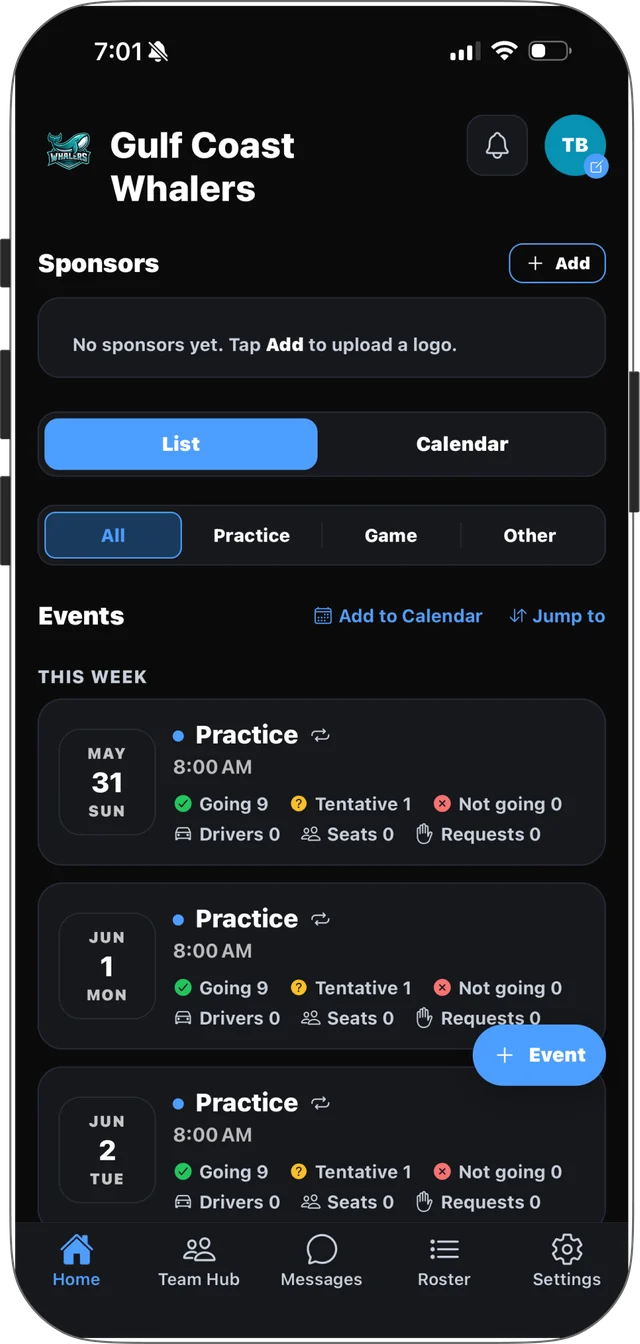
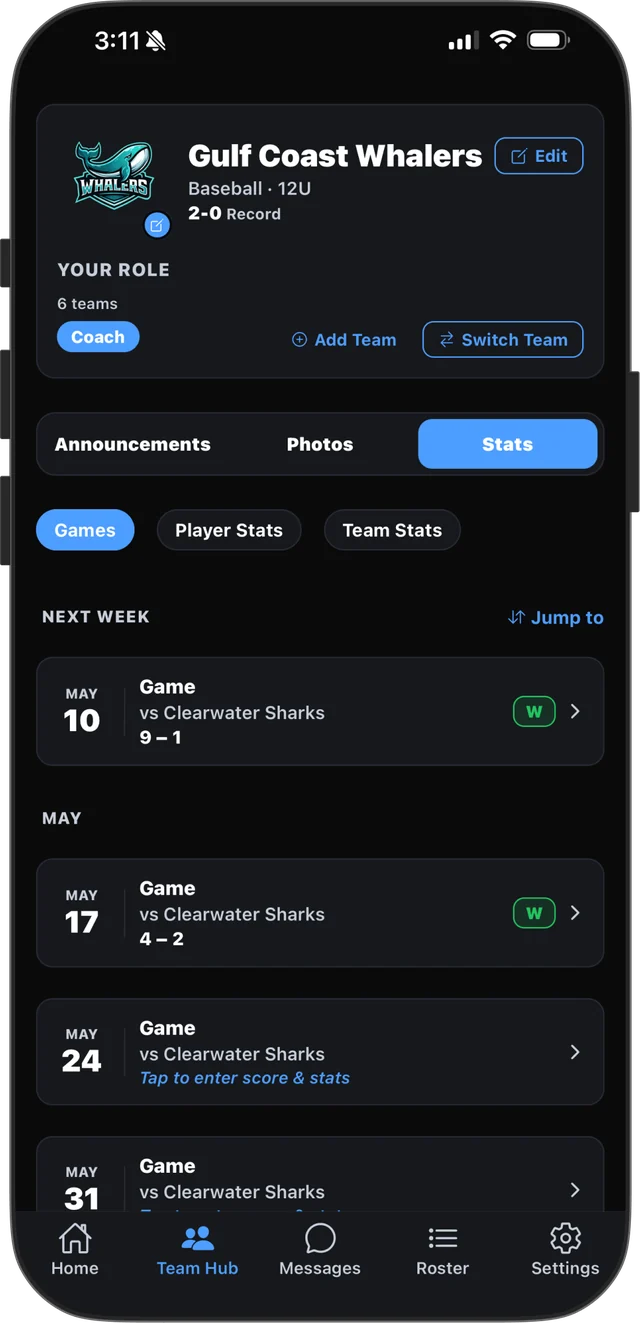
The short version
Youth and amateur teams run on group texts. Schedules get buried, parents miss changes, and coaches spend their time chasing RSVPs instead of coaching. I lived that as a college head coach.
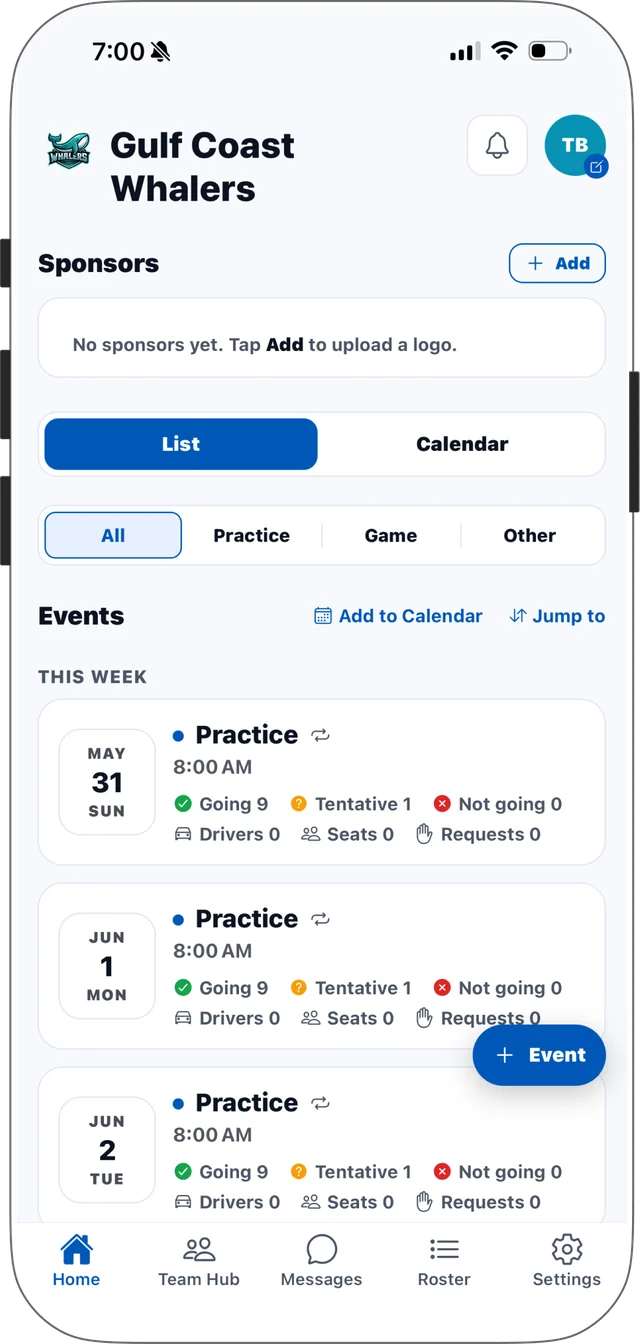
Captain gives a team one place for its schedule, RSVPs, carpools, messages, roster, stats, photos, and announcements. It's set up for 28 sports. I designed it, built it, and shipped it on iOS, Android, and the web, by myself, using AI as my engineering partner. I started building in December 2025, made it an official company (LLC) in March 2026, and launched in the app stores on May 11, 2026, about five months from first line of code.
The problem
- Coaches are the bottleneck. Every schedule change, RSVP, and ride question goes through one person's phone.
- Group texts don't scale. Important updates get lost between replies, and the people who need the information (parents, guardians, players) don't reliably see it.
- Youth teams need protection. Any tool that holds kids' information has to control who sees it, not leave it open to whoever joins a chat.
How AI changed the MVP
I started the week before Christmas 2025 by asking ChatGPT for code and copying it in by hand. In February I moved to Claude inside my code editor, and my speed changed enough that I rescoped the product.
The original MVP was a basic proof of concept. With AI handling most of the implementation, I could afford to ship features I'd planned for later, and launch with a product that felt complete:
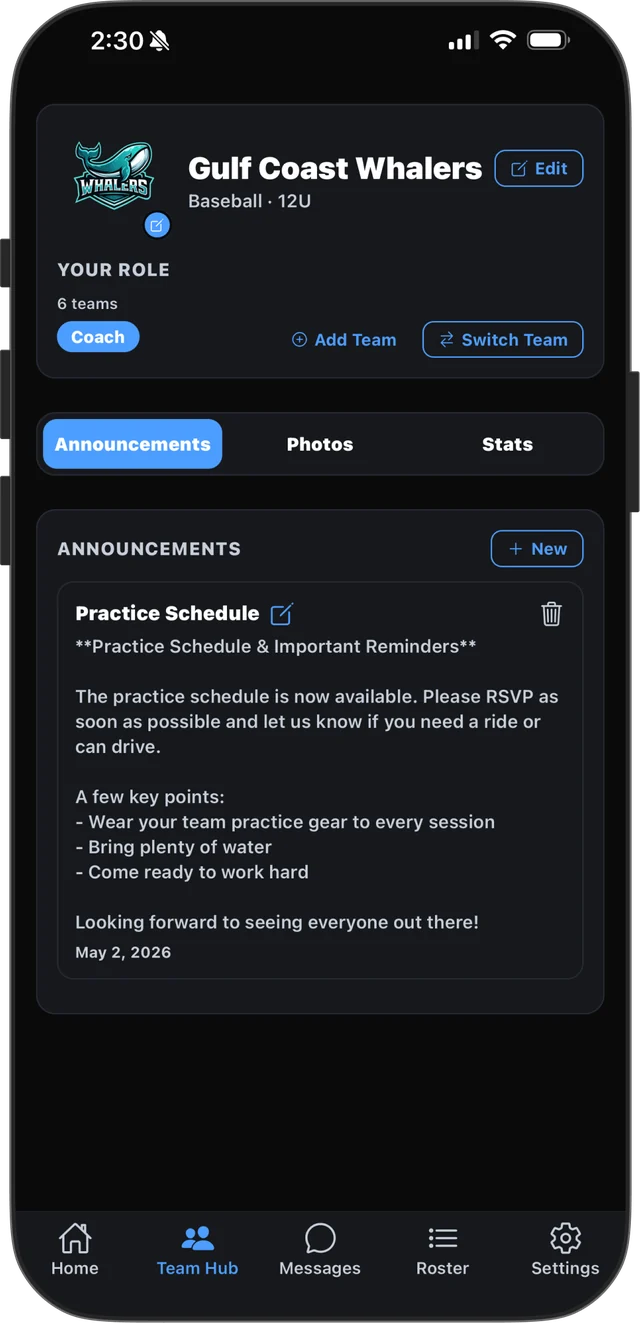
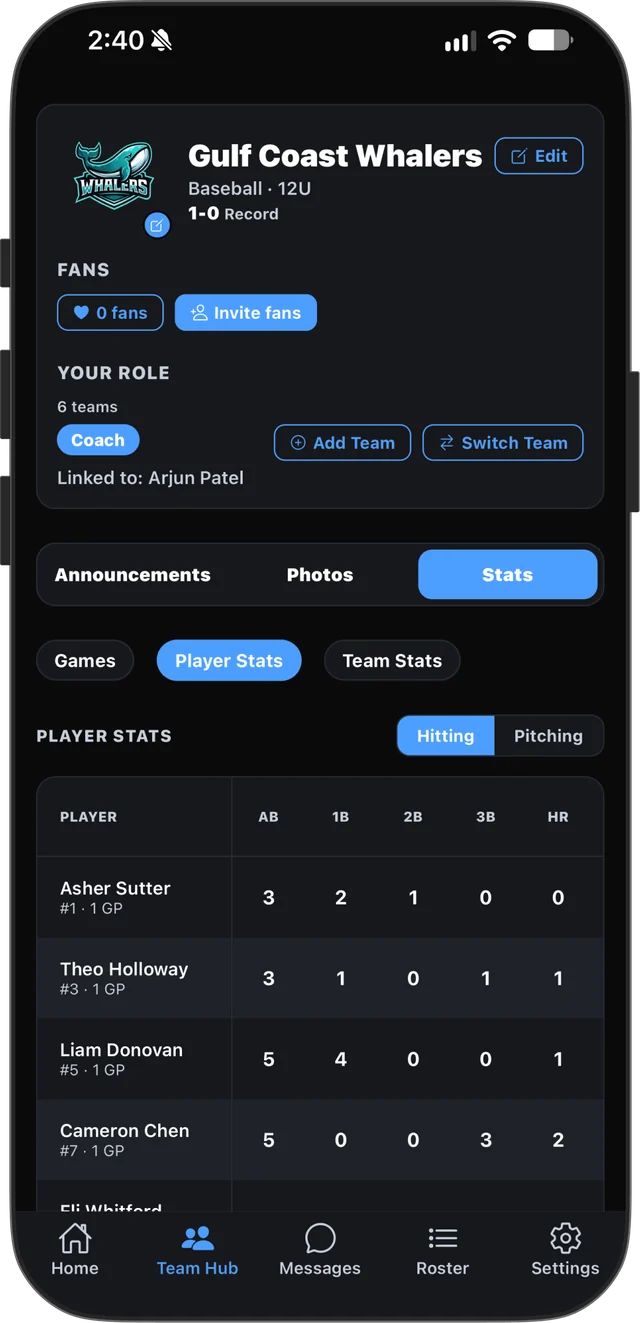
- Stats for games and players
- Team photos
- Announcements
- Avatar pickers
- Maps and saved locations for games and practices
- Light and dark mode
The lesson I'd bring to any team: AI changes the cost of building, so it changes what's worth putting in v1. The constraint moves from "can we build it" to "should we, and is it safe."
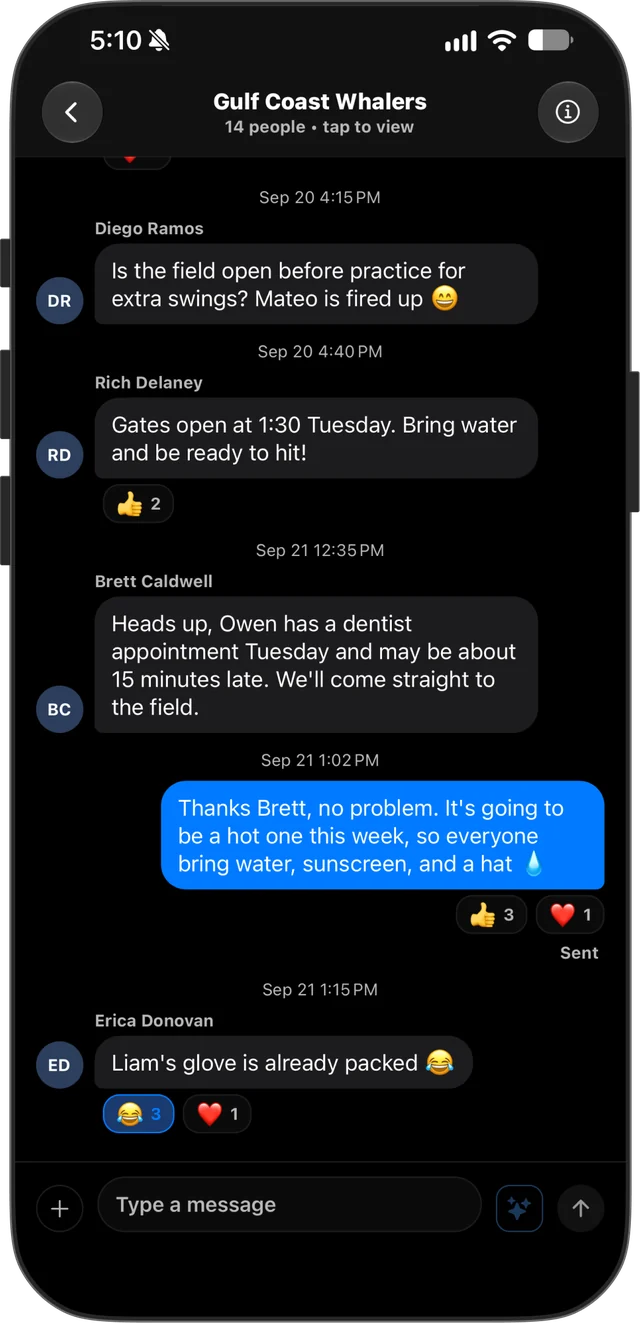
What I chose not to build
Cheaper building made saying no more important, not less. Two calls I made on purpose:
- No live scoring, for now. Large, established apps already own live game scoring. Competing with them head-on would have eaten my time without giving coaches a reason to switch. Captain keeps stats simple and focuses on running the team.
- No in-app payments, for now. Collecting fees means handling refunds, disputes, and support emails. For a one-person company, that support load would have pulled time away from the product itself. I'd rather do it well later than badly now.
AI inside the product
Captain doesn't only use AI to get built. Two features put it in front of coaches:
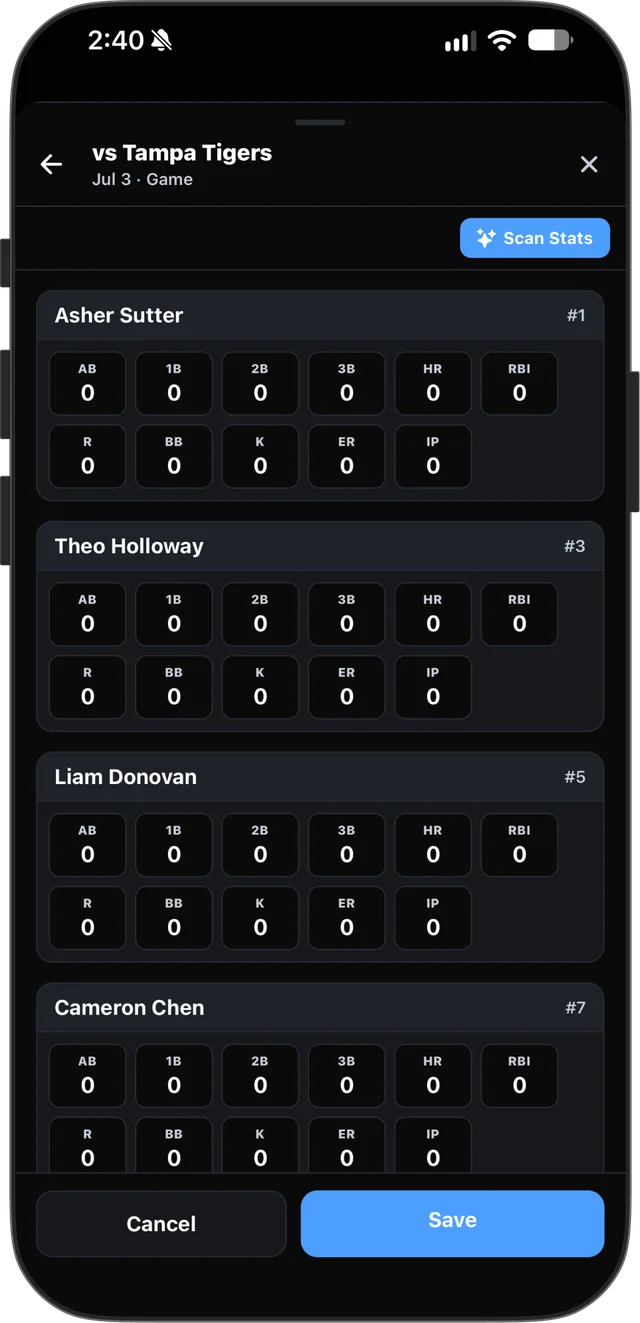
- Scorebook photo to stats. A coach photographs a paper stat sheet or scorebook, and AI vision turns it into structured stats for each player. That replaces typing every number in after a game.
- AI Assist for messages. A coach types rough bullet points, and Captain turns them into a clear, polished message or event note.
Both take the most tedious part of a coach's day and make it a single step.
Safety as a product requirement
A lot of Captain's users are kids, so I treated privacy as a core feature, not an afterthought:
- Guardian linking. Youth players are connected to their parents or guardians, and guardians control what's shared and who can message their kid.
- Access rules enforced in the database itself, not just hidden in the interface. A player's information isn't visible just because someone has the app.
- Coaches control what's public. Fans see only what a coach chooses to share.
Listening to early users: fans
After launch, coaches told me that family and fans outside the roster wanted to follow along. I added a fan experience: fans can follow a team's games and locations, coaches decide exactly what fans can see, and coaches can send announcements to fans as well as to the team.
It started as a user request and became a new audience for the product, with the same privacy controls built in.
Where it is today
Captain has been live since May 2026 with 3 teams (about 30 users) in early access. They're teams I know and recruited to test it, and they're still on it; their sports are between seasons right now. Subscription billing is built in, and its first handful of App Store ratings are five stars. It's a side project alongside my full-time role, so I've chosen to learn from a few real teams before trying to grow it.
“I appreciate how clean and smooth everything is. You made something genuinely useful for coaches and schedulers. The ease of use to communicate with your team and family members is second to none.”
Coach using Captain
“I’m telling everyone I know to download this. Nailed it.”
Coach using Captain
Marketing it myself, with a tool I built
A one-person company also has to do its own marketing. Instead of paying for a video editor that didn't fit, I built my own tool in about a day with Claude. It turns real Captain screenshots into short social media videos, customized for exactly what I needed.
What I learned
- AI moves the hard question from "can we build it" to "should we." The scope decisions mattered more than the build speed.
- Saying no is a product feature. Skipping live scoring and payments kept a one-person product focused on what coaches actually needed.
- Real users change the roadmap. The fan experience wasn't in my plan. Coaches asked for it, and it became a new audience.